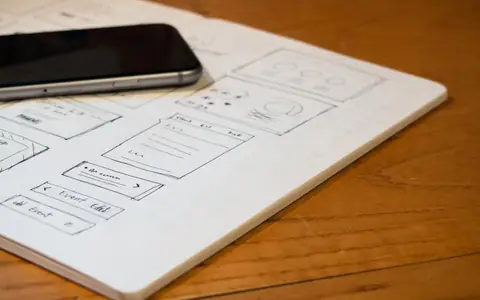

Ready-Made Theme or Custom Design?
Compares the speed, security and brand differentiation problems of ready-made templates with custom design, and walks you through the criteria for deciding.
 Aurora YazılımEditorial team
6 min read
For businesses aiming at long-term growth, brand differentiation and search visibility, a custom design is the healthier choice. Ready-made templates offer a quick start; however, they look the same as other sites, can slow down because of unused code and leave you dependent on third parties for updates. When deciding, look not only at the initial cost but at the site's next few years.
What Are a Ready-Made Theme and a Custom Design?
A ready-made theme or template is a site skeleton designed in advance to be sold to thousands of people. You adapt it to your own site by changing colors, fonts and images, while the page layout, components and code structure stay largely the same.
Custom design, on the other hand, starts from scratch. First the business's goal, audience and brand identity are studied; then page layouts, components and interactions are designed and coded for that need. The result is an interface that belongs only to you.
The difference between the two approaches is not only how they look. Speed, security, maintenance, SEO and flexibility for growth are all directly affected by this choice.
The Appeal of a Ready-Made Template
Understanding why templates are so widespread is the first step to making the right decision. Their main attractions are:
- Quick start: Because demo content is ready, the first look appears in a short time.
- Low initial effort: The design phase is largely skipped.
- Choosing by sight: You can see the result on a demo site before you buy.
Disadvantages of Ready-Made Website Templates
The problems with templates usually appear after launch. As the site grows, as new needs arise and as competitors start using the same look, these problems become more visible.
Brand differentiation is lost
A popular template can be used by dozens of companies in the same industry. If visitors cannot tell you apart from your competitor, brand recall weakens. Changing the logo and colors does not solve the look-alike problem on its own.
The weight of unused code
Templates come with dozens of features to appeal to as many people as possible: sliders, animation libraries, different page layouts. Even if you use only a few of them, a significant part of the code may load on every page. This hurts page speed and Core Web Vitals scores.
Security and dependency
Templates usually work together with other plugins and libraries. When one of these components is not updated, or its developer drops support, your site can face vulnerability risks. When one update breaks another, finding the source of the problem takes time.
A limit on flexibility
When you want a layout or function the template did not anticipate, you have to force the existing structure. As these workarounds pile up, the code becomes complicated and every new change gets more expensive and risky.
Advantages of Custom Web Design
Custom design builds every part of the site around the business's needs. The concrete benefits of this approach are:
- A unique look: The interface belongs only to your brand and stays in the visitor's memory.
- Lightweight code: Only the components that are needed are written; pages open faster.
- User journey: The menu, page layout and calls to action are designed around your audience's behavior.
- An SEO foundation: The heading hierarchy, URL structure and structured data are set up correctly from the start.
- Flexibility for growth: Adding a new section, language or function can be done without breaking the existing structure.
Speed and Performance Comparison
Page speed is a measurable value that affects both user experience and search visibility. In real-user data, Google defines 2.5 seconds for LCP, 200 milliseconds for INP and 0.1 for CLS as the “good” thresholds.
Meeting these thresholds on template-based sites is not impossible, but it usually takes extra cleanup and optimization. In custom design, performance can be planned from the start as part of design decisions. We describe this process in detail on our speed and performance management page.
| Criterion | Ready-made template | Custom design |
|---|---|---|
| Time to start | Short | Longer, requires planning |
| Brand uniqueness | Limited | Full |
| Code weight | May include unused components | Only the code that is needed |
| Security updates | Dependent on third parties | You are in control |
| Adding new functions | Within the template's limits | According to your needs |
| Long-term cost | Can grow with changes | More predictable |
Why Does User Experience Make the Difference?
Templates are designed for a general audience; they do not know how your customer thinks. A hotel's visitor looks for dates and rooms, an industrial company's visitor wants technical documents and a quote form, and a restaurant's visitor looks at the menu and location.
In custom design, these differences are identified through user research and the interface is shaped accordingly. The position of buttons, the length of forms and the order of information may look like small details, but they directly affect the conversion rate. You can see how we apply this approach in our UI/UX design service.
A consistent visual language provides brand integrity beyond the logo and colors. For the site to speak the same language as social media, catalogs and signage, it is ideal to plan it together with brand management work.
Which One in Which Situation?
Answer the questions below honestly when deciding. If most of your answers are “yes”, a custom design will be the better long-term investment.
- Is standing out visually from your competitors important to you?
- Do you expect regular inquiries, quote requests or sales from the site?
- Is being visible in search engines among your goals?
- Do you plan to add new services, languages or functions in the coming years?
- Do you want full control over the site's security and maintenance?
How Does the Custom Design Process Work?
Custom design can feel uncertain to some businesses because it seems like “starting from a blank page”. Yet a well-managed process is made of clear steps that show what is approved at each stage and leaves no surprises.
Throughout these stages, the business owner sees not only the finished result but also the reasons behind the decisions. That way the design rests on a business goal rather than a debate about taste. If you are curious about the background of interface decisions, take a look at our posts tagged UI/UX.
- Discovery: the goal, audience, competitors and the current site's data are examined.
- Information architecture: the sitemap and page priorities are drawn up.
- Wireframes: the page layout is approved before color and imagery.
- Visual design: brand colors, typefaces and components are prepared for desktop and mobile.
- Development and testing: the code is written, speed and accessibility are measured, forms are tried.
- Launch and measurement: search and analytics tools are set up and the first data is monitored.
What Should I Do with My Existing Template Site?
If you already have a template-based site, you do not have to change everything at once. First measure the site's speed, mobile view, search performance and number of inquiries. If the problems are small, improvement may be enough; if the structure keeps holding you back, a rebuild makes more sense.
When moving to a rebuild, keeping the existing URLs or redirecting them correctly is critical so you do not lose search rankings. We explain this process step by step in our post on website redesign. For budget planning, you can also look at our web design pricing guide.
Frequently Asked Questions
01Does custom design take longer?
Yes, it takes more time at the start because of the discovery, wireframe and approval stages. On the other hand, the time spent fighting the template after launch disappears, so the total effort often balances out.
02Can I manage a custom-designed site myself?
Yes. Custom design does not mean there is no admin panel; content such as text, images, the blog and references can be updated easily from the panel. The panel is also kept simple according to your needs, so it is easy to learn.
03Does using a template hurt SEO?
There is no direct penalty. But slow-loading pages, a complicated heading structure and repeated content blocks can weaken search performance indirectly.
04Can revisions be made in a custom design?
Yes. Because the process starts at the wireframe stage, the layout and visual language are settled over a few rounds before coding begins. After launch too, because the site is written for your needs, adding a new section or changing existing pages does not run into template limits.
The answer to the ready-made theme or custom design question depends on what you expect from your site; if you want to grow, stand out and be found, a custom interface made for your company offers a stronger foundation in the long run. Explore Aurora Yazılım’s web design approach and talk to us about a corporate website or a redesign project made for your brand. If you are curious about the building blocks of a corporate site, our post on what is a corporate website will help.